
A Nice House
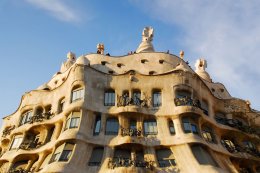 The Mila House in Barcelona is one of the masterpieces in Catalonia, created by the Catalonian architect of Antonio Gaudi in 1906-2010. It's the last completed Gaudi creation. After the completion of his work, he was downloaded to the construction of the Temple of the Holy Family by abandoning any other projects.
The official name of the house is Qasa Mila, on behalf of the client. However, people called him La Pedrera, meaning “Camerolny”.
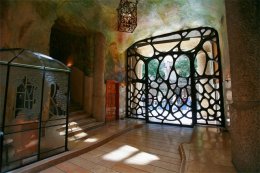 This building is part of a dozen of Barcelona's most popular virtues: La Pedrira receives about 1 million visitors per year.
In 1969, it was recognized as a national monument to Spain, and in 1984 the House of Mila, the first of the twentieth century ' s structures, was included by UNESCO in the World Heritage List.
 History of construction
Mila's house is called this by no accident: it was built by Antonio Gaudi on a textile magnate order and Per Mila-i-Camps policy. Under the project, the laundry was placed in the residential premises for the client ' s family, and the remaining floors were intended for leaseswhich was traditionally for that time.
Per Mila ' s financial situation was markedly affected during the construction of the house. The reason is that the building eventually exceeded the existing height and width standards and Barcelona authorities repeatedly fined the customer.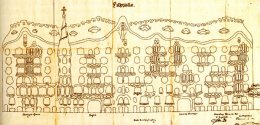 The construction of the house had already been completed without Gaudi: due to financial disagreements with the client, the architect had refused to run the project in 1909 and had had to go to court to obtain the fee.
Mila House architecture
Disein Kasa Mila in Barcelona can rightly be described as innovative even in comparison with the leading style of that time, modernism. The design of the ironbethone with the insidious columns allowed the need for the building ' s support walls to be abandoned.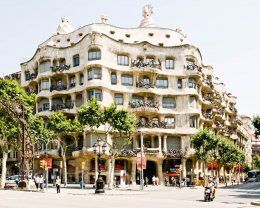 The walls at Mila House are internal partitions that can be moved and thus simulate space at the request of the hosts and tenants.
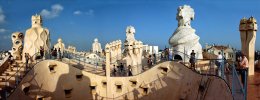
Fasad La Pedrira reminds the rocks of sea waves. The balcony cells look like sea algae. The wolf lines that move one into the other, and the lights play create an illusion of the constant movement. Gaudi was a deeply religious man, so each of his creations contains a religious symbol. On the upper carnival of the building, there are steep boots of roses with Ave Maria in Latin.